A bouquet you bring home is still alive. The flowers keep drinking, breathing and reacting to warmth. How long it lasts depends on how fresh the flowers were and on what happens at home afterwards. Usually a few simple habits make the difference: a clean vase, properly cut stems, fresh water and a cool spot.
The short version
- Cut 1–2 cm off each stem at an angle, using a sharp knife or secateurs.
- Use a vase that has been washed with washing-up liquid.
- Strip any leaves that would sit below the waterline.
- Change the water every day, or at least every second day.
- Add the flower food sachet if one came with the bouquet.
- Keep the vase away from fruit, radiators, direct sun and draughts.
The first hour at home
If the bouquet was tied with a water pouch at the base, remove it carefully over the sink.
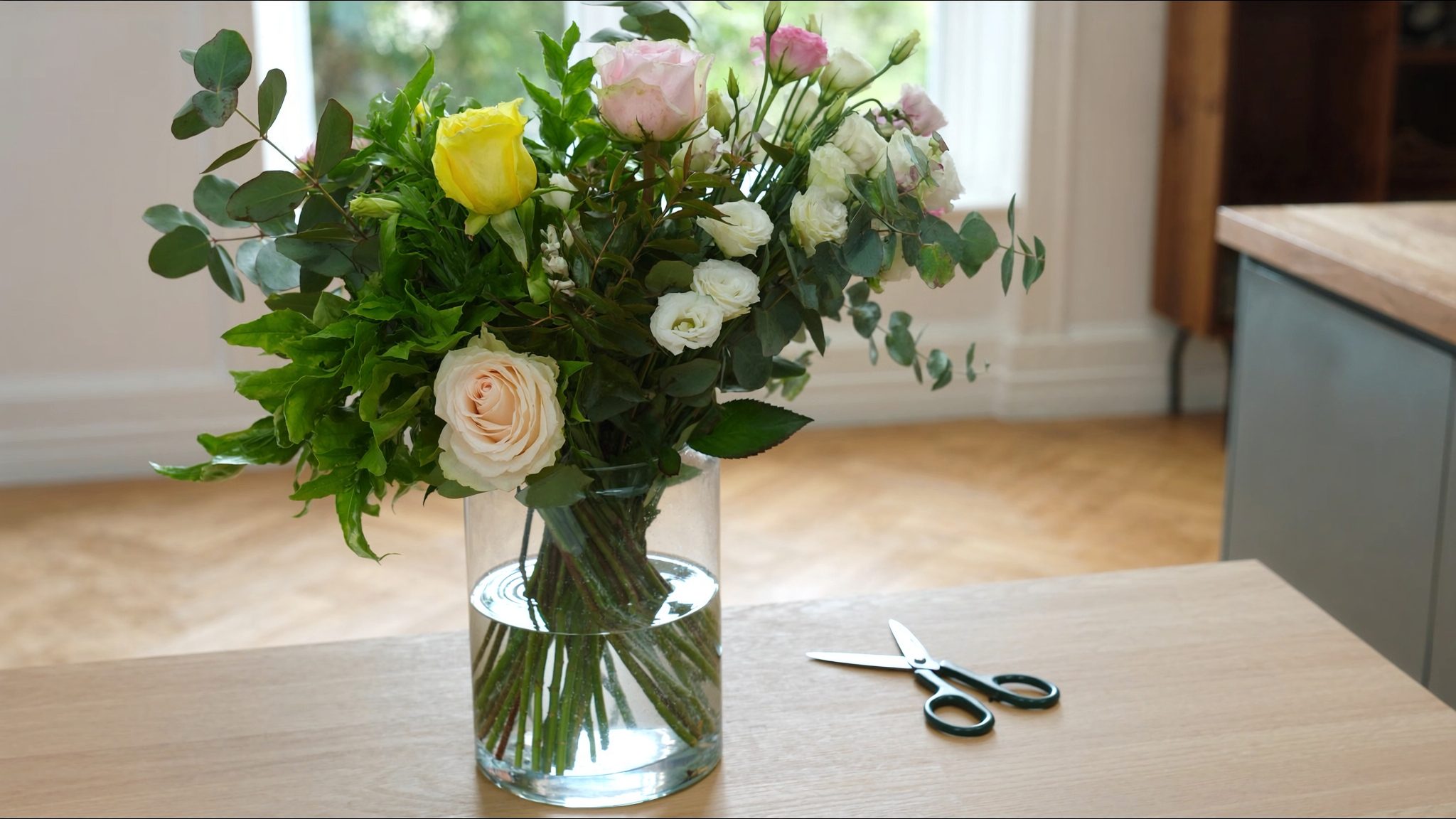
- Prepare the vase. Wash it with warm water and washing-up liquid, then rinse well. Bacteria left on the inside of a vase are one of the most common reasons the water clouds quickly and stems start to rot.
- Fill it with room temperature water. For most flowers, half to two thirds of the vase height is enough.
- Dissolve the flower food. It contains sugar to feed the blooms and ingredients that slow the growth of bacteria. Use the amount printed on the sachet.
- Remove the lower leaves. Anything left under water begins to decay and spoils the water for the whole bouquet.
- Cut the stems. Cut each stem at an angle with a sharp knife or florist scissors. An angled cut gives the stem a larger surface to drink through and stops it sitting flat on the bottom of the vase. Blunt scissors crush the stem, which makes it harder for water to travel up.
- Put them in water straight away. A freshly cut stem end dries quickly in the air.
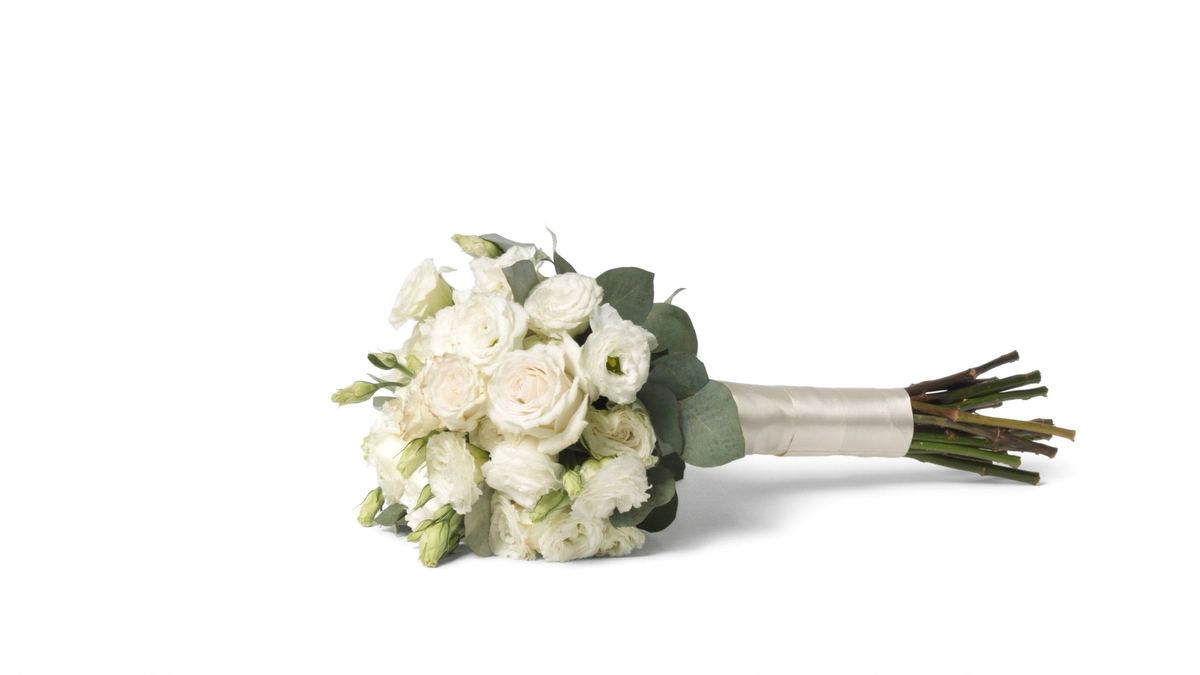
If the bouquet is hand-tied in a spiral and you want to keep its shape, leave the tie in place. Hold the bouquet upright and cut all the stems together at the same height.
Daily care
Water
Change the water daily, or every other day at the latest. Do not top up old water with new: pour it all out, rinse the vase and refill. If the water turns cloudy or starts to smell, wash the vase again with detergent.
If you have no flower food, clean water changed more often is your best option. Popular home tricks such as an aspirin or a coin in the vase are no substitute for a clean vase and fresh water.
Re-cutting the stems
Every two or three days, trim another centimetre or two off the stems. Over time the cut end clogs up and the flower drinks less and less.
Faded flowers
Take out wilted blooms and yellowing leaves as soon as you see them. The bouquet looks tidier and the water stays clean for longer.
Where to keep your bouquet
- Away from fruit. Ripe apples, bananas and other fruit release ethylene, a gas that speeds up ageing in flowers. A vase next to the fruit bowl is one of the most common kitchen mistakes.
- Away from heat. Radiators, the hob, the oven, strong sun through a window. Warmth makes flowers lose water faster and open faster.
- Out of draughts. An open window or balcony door in the colder months can damage the petals.
- Cooler at night. If you have a cooler room, you can move the bouquet there overnight. Cool air slows down opening.
A bright spot by a window is fine, as long as the sun does not beat down on it and there is no radiator underneath. In Lithuania, the heating season in autumn and winter is usually what shortens a bouquet's life the most.
Roses
Before putting roses in water, strip every leaf that would sit below the waterline. You can leave the thorns unless they get in the way. Outer petals that look dry or bruised can be gently pulled off; the bloom is fine without them.
If a rose head droops right under the flower, air has usually got into the stem and water is no longer reaching the bloom. It is worth trying to save it: recut the stem by a few centimetres, wrap the rose firmly in paper so it stands straight, and stand it in deep, cool water for a couple of hours. Often the head lifts again.
Tulips
Tulips behave differently. They keep growing in the vase, sometimes by several centimetres, and bend towards the light. So:
- use less water, just a few centimetres, and keep it cool;
- turn the vase a little each day so the stems do not all lean one way;
- choose a taller vase that supports the stems.
If your tulips droop when you get them home, wrap them straight in paper and stand them in cool water for an hour or two. Avoid putting tulips in the same vase as freshly cut daffodils: the sap from daffodil stems harms other flowers. Keep daffodils in a separate vase first.
Chrysanthemums
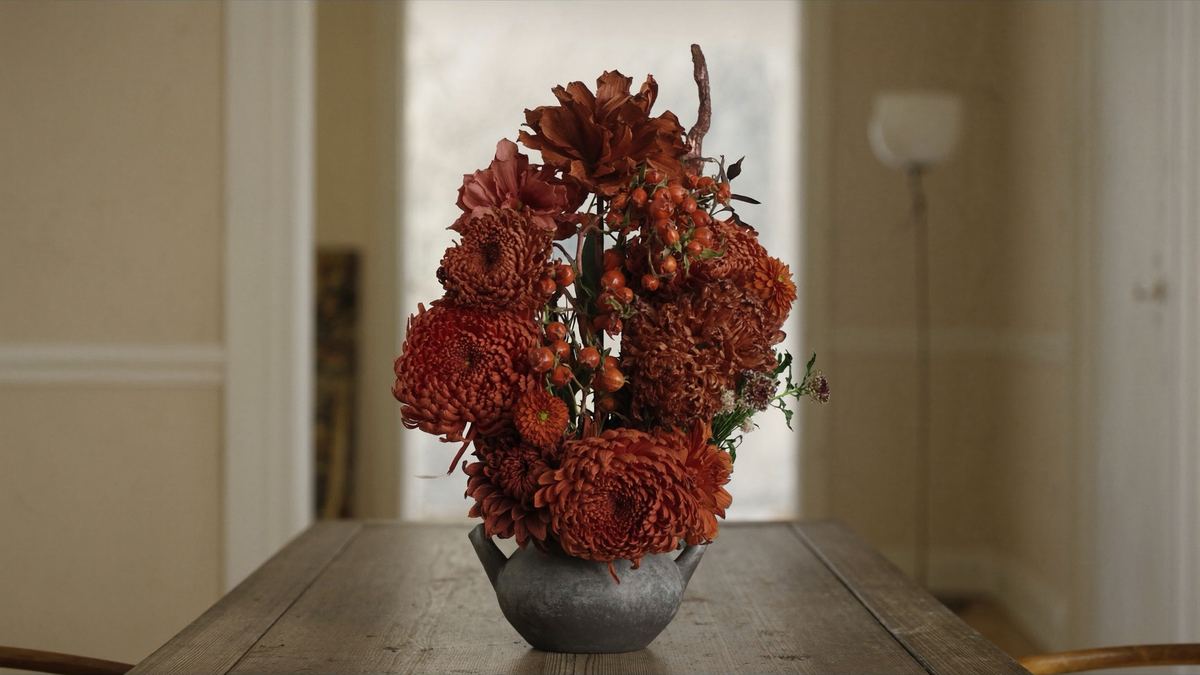
Chrysanthemums are among the longest-lasting cut flowers and, with good care, often stay fresh for two or three weeks. Their leaves, however, rot very quickly in water, so clean the lower part of the stems thoroughly. The stems are tough, so use a sharp knife or secateurs rather than kitchen scissors. Chrysanthemums cope well with cool rooms but dislike cloudy water, so regular water changes matter most for them.
How long a bouquet can last
There is no fixed answer, because every flower is different. A mixed bouquet looked after as described above usually looks good for around a week, and some flowers, such as chrysanthemums or alstroemeria, last longer. Tulips and some garden flowers tend to be shorter-lived. When some flowers fade first, take them out and move the rest to a smaller vase.
Fresh bouquets in Kaunas
Gitanos gėlės is a florist stand inside the Šilas supermarket at A. Baranausko g. 26, Kaunas, open every day from 8:00 to 23:00. You can choose a bouquet on the spot, or pre-order one by SMS on +370 656 38880 or at gitanosgeles.lt and collect it when it suits you. When you pick it up, ask how best to care for the particular flowers you have chosen.