The bridal bouquet appears in almost as many photos as the dress, so it is worth choosing without rushing. The short answer: pick the shape to suit your dress and height, pick the flowers to suit the season, and talk to the florist several weeks before the wedding.
Bouquet shapes
Round
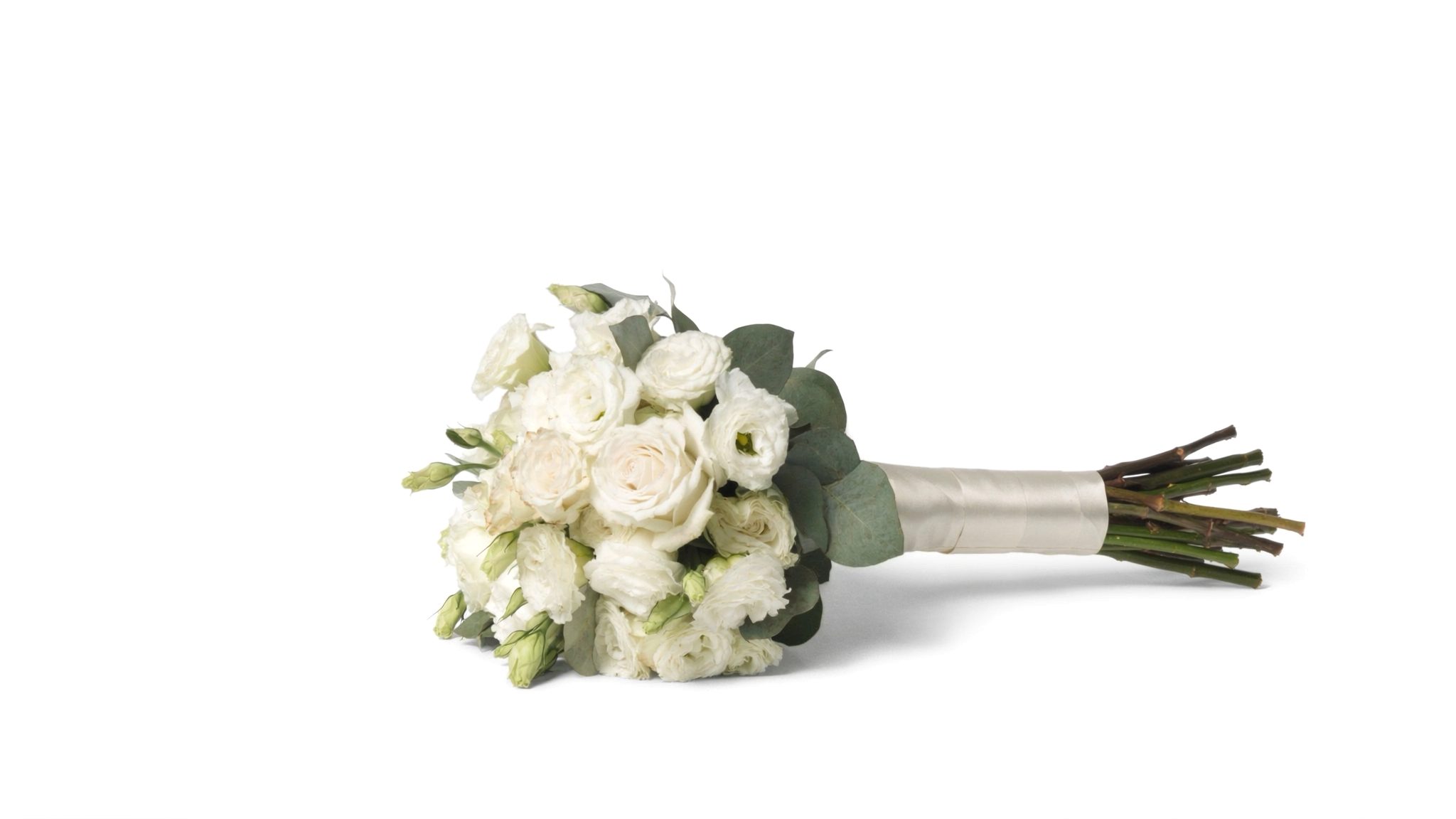
The classic and most versatile shape. The flowers are packed closely into a dome. A round bouquet goes with almost any dress, photographs well and is comfortable to hold. It can be made from one type of flower, for example only roses, or from a mix. A smaller version works well for bridesmaids.
Cascade
A cascade bouquet flows downwards like a teardrop or a waterfall. It is formal and eye-catching, so it suits a long, elaborate dress and large spaces such as a church or a manor hall. It is heavier and takes more of the florist's time, so it usually costs more.
Loose garden style
This bouquet looks as if the flowers were just picked from a garden: the shape is asymmetrical, greenery shows between the blooms and the stems are often left longer. It suits simpler, light dresses and weddings outdoors, at a countryside homestead or in a garden. Garden roses, lisianthus, peonies, chamomile and a variety of greenery look natural in it.
Matching the bouquet to the dress
A simple rule: the simpler the dress, the more freedom the bouquet has, and the other way round.
- An ornate dress with heavy detail or a full skirt: a round or cascade bouquet in calmer colours, so it does not compete with the dress.
- A straight, minimalist dress: a small round bouquet or a few long-stemmed flowers.
- A light, flowing dress: a loose garden-style bouquet.
Match the colour to the shade of the dress as well. Next to a pure white dress, cream flowers can look slightly yellowed, while for an ivory or champagne dress cream and soft pink often work better than bright white. Bring a photo of the dress or a fabric sample. It helps more than any description.
Seasonal flowers in Lithuania
Roses and lisianthus are available all year, so a bouquet can be built from them in any season. Seasonal flowers, however, are often more beautiful, more fragrant and better value.
- Spring. Tulips, daffodils, and in May lilac and lily of the valley. Both bloom only briefly, so they need to be discussed in advance.
- Early summer. Peonies bloom in Lithuania in June. They are one of the most popular wedding flowers, but the season is short.
- Summer. Garden roses, chamomile, delphiniums, gypsophila and plenty of greenery.
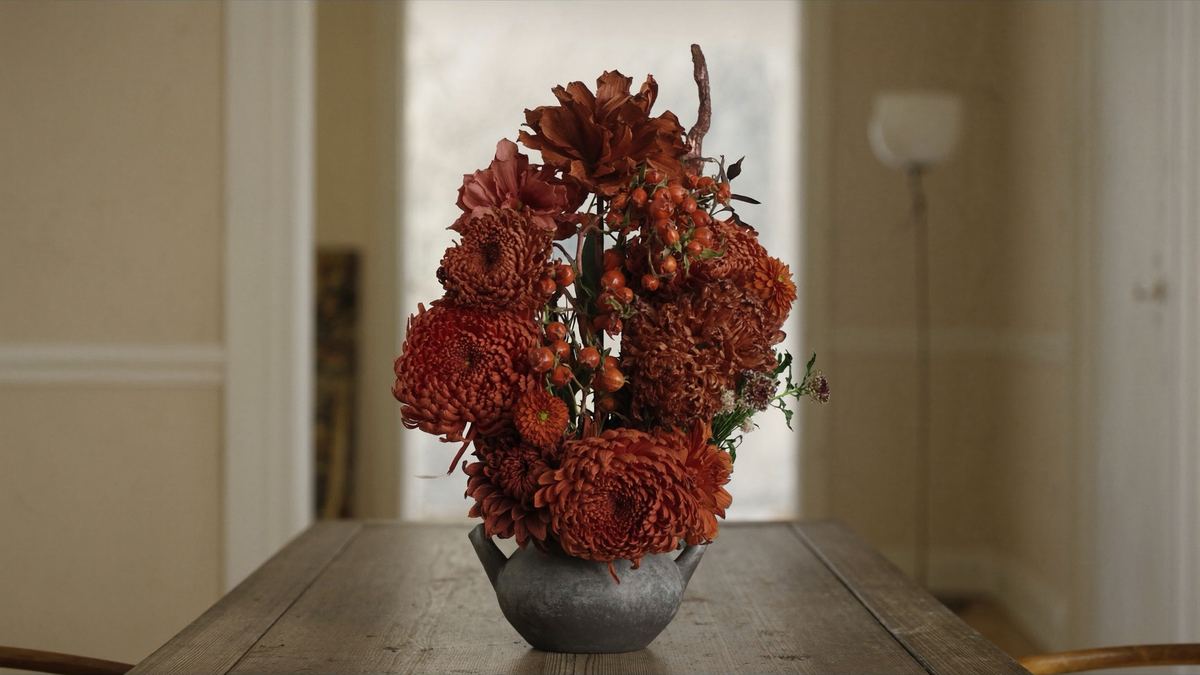
- Autumn. Dahlias, hydrangeas, chrysanthemums and asters, with rose hip branches adding warmth.
- Winter. Roses, lisianthus, ranunculus, amaryllis and eucalyptus or other greenery.
If you dream of a particular flower out of season, peonies in autumn for example, ask the florist early. Not everything is available at any time, and sometimes other flowers, such as peony-shaped roses, create a similar effect.
In Lithuanian wedding tradition rue (rūta) holds a special place: a rue wreath was long a symbol of youth and maidenhood. A sprig of rue tucked into the bouquet or the boutonniere is a quiet nod to that tradition.
Size relative to the bride
The bouquet should suit your height and figure, not hide them.
- A petite bride looks best with a small, compact bouquet. A large one can overwhelm her.
- A taller bride can comfortably carry a larger round, loose or cascade bouquet.
- As a guide, the bouquet should not be wider than your waist, so the silhouette of the dress stays visible in photos.
Hold the bouquet with both hands at about navel or hip height, with your elbows relaxed. Remember you will be holding it for hours: during the ceremony, the photo session and the congratulations. A large bouquet with many blooms can be surprisingly heavy, so ask to lift one before you decide.
When to order
Talk to the florist several weeks before the wedding, and earlier in summer, when most weddings take place. For the first conversation it is enough to discuss:
- the wedding date, and when and by whom the bouquet will be collected;
- a photo of the dress and the wedding colours;
- the shape and flowers you have in mind, if you already know;
- your budget;
- how many extra bouquets or boutonnieres you need for bridesmaids, the groom and groomsmen.
Confirm the final details about a week before. Bridal bouquets start from 60 €, and the final price depends on size, shape and the flowers chosen.
Keeping the bouquet fresh on the day
The bouquet is made as close to the wedding as possible so that it is at its freshest. Because it needs to be collected, agree in advance who will do it: the maid of honour, a groomsman or a relative.
- Until the ceremony, keep the bouquet in water in a cool place, away from sun and heaters.
- Do not leave it in a hot car. In summer that is one of the quickest ways to wilt a bouquet.
- Between the ceremony and the photo session, put the stems back in water if you can.
- Dry the stem ends before picking it up, so water does not mark the dress.
- If the stems are wrapped in ribbon, ask the florist to leave the ends free so the bouquet can stand in water.
In summer heat, choose sturdier flowers. Roses, lisianthus and chrysanthemums cope better without water than, for example, hydrangeas, which drink a lot.
The groom's boutonniere
The boutonniere is made from the same flowers as the bridal bouquet, only very small: usually one bloom or bud with a little greenery. It is worn on the left lapel with the stem pointing down, and the pin goes in from the back so it does not show. Since it stays out of water all day, it is made from hardy flowers. Matching but simpler boutonnieres can be made for groomsmen and fathers.
A bouquet for tossing
If you plan to toss the bouquet, order a second, smaller and lighter one for that purpose. Then you can keep your real bouquet and, if you wish, dry it as a keepsake.
A bridal bouquet in Kaunas
Gitanos gėlės is inside the Šilas supermarket at A. Baranausko g. 26 in Kaunas, open daily 8:00–23:00. To talk about a bridal bouquet in advance, send an SMS to +370 656 38880 or visit gitanosgeles.lt, where you can also place an order.