Cut roses usually last about a week in a vase, and often longer if they were fresh when you bought them and you look after them well. Three things matter most: which roses you choose, what you do with them in the first hour at home, and whether you change the water regularly.
How to choose fresh roses
- A firm head. Gently squeeze the flower right at its base, where the petals meet the stem. A fresh rose feels firm there, almost hard. If the head is soft and gives easily, the rose is older.
- The outer guard petals. You will often notice that one or two outer petals look a little darker, bruised or greenish. That is normal: growers leave them on deliberately because they protect the bloom in transport. You can pull them off carefully at home. If the inner petals are damaged too and their edges are brown, that is no longer protection, it is age.
- Leaves and stem. Leaves should be green and crisp, not yellowing or limp. The stem should be straight and firm, and the cut end pale, not brown or slimy.
- How open the bloom is. If the roses are for you and you want them to last, choose blooms that are not fully open yet. If the bouquet is for a celebration tonight, more open flowers are fine.
What to do when you get home
The first hour matters most. On the way home the roses are not drinking, the cut ends start to dry and air gets into the stems.
- Use a clean vase. Wash it with a drop of washing-up liquid and rinse it well: bacteria left over from previous flowers are the main thing that shortens a rose's life.
- Fill it with cool or room-temperature water. If the bouquet came with a sachet of flower food, dissolve it as the packet says.
- Remove every leaf that would sit below the waterline. Leaves rot quickly in water and cloud it.
- With a sharp knife or secateurs, cut 2–3 cm off each stem at an angle. An angled cut gives the stem a larger surface to drink through and stops it sitting flat on the bottom of the vase. Blunt kitchen scissors crush the stem, so avoid them.
- Put the roses into water straight away. If you have time, leave them somewhere cool for a few hours to drink well before moving them to where you want them.
Water and where to put them
Roses drink a lot, especially in the first days, so check the water level every day.
- Change the water every 1–2 days rather than just topping it up.
- Each time you change the water, trim about another centimetre off the stems.
- Keep roses away from radiators, direct sun and warm electronics. In the heating season, roughly October to April in Lithuania, flats are warm and dry, and roses fade faster than in summer.
- Do not put the vase next to a fruit bowl. Ripening fruit, especially apples and bananas, gives off ethylene, which makes flowers age faster.
- If you can, move the vase to a cooler room overnight. Cool air slows down opening.
Drooping heads and how to revive them
Sometimes, as early as the next day, one or two roses bend their heads although the petals still look fresh. The usual cause is an air bubble in the stem or a blocked cut end: water simply is not reaching the flower. These roses can often be saved.
- Take the rose out and cut 2–3 cm off the stem under water, for example in a bowl. Cutting under water stops new air getting into the stem.
- Wrap the head and the top part of the stem firmly in paper so the head is held upright.
- Stand the rose in a tall container of water so as much of the stem as possible is submerged, and leave it somewhere cool for a few hours.
Another method is to lay the whole rose, head included, in a bath or large basin of cool water for about an hour. If the head still does not lift after a few hours, the stem is probably damaged. Cut it short and enjoy it in a small vase.
Thorns and leaves
Most florists strip the thorns from the lower part of the stem before tying a bouquet so it is comfortable to hold. At home you can snap thorns off with your fingers or snip them, but do not scrape the stem with a knife: a damaged stem lets bacteria in more easily and the rose wilts sooner.
Leave the upper leaves on. Remove only the leaves that would touch the water and any that turn yellow.
How long roses last
Standard cut roses, well looked after, usually last 7–10 days and sometimes longer. Variety, freshness and room temperature all play a part. In a warm room next to a radiator even good roses can fade within a few days.
Spray roses, with several small blooms on one stem, last about as long. Pinch off spent blooms as they fade so the rest of the stem stays neat.
Garden roses versus standard roses
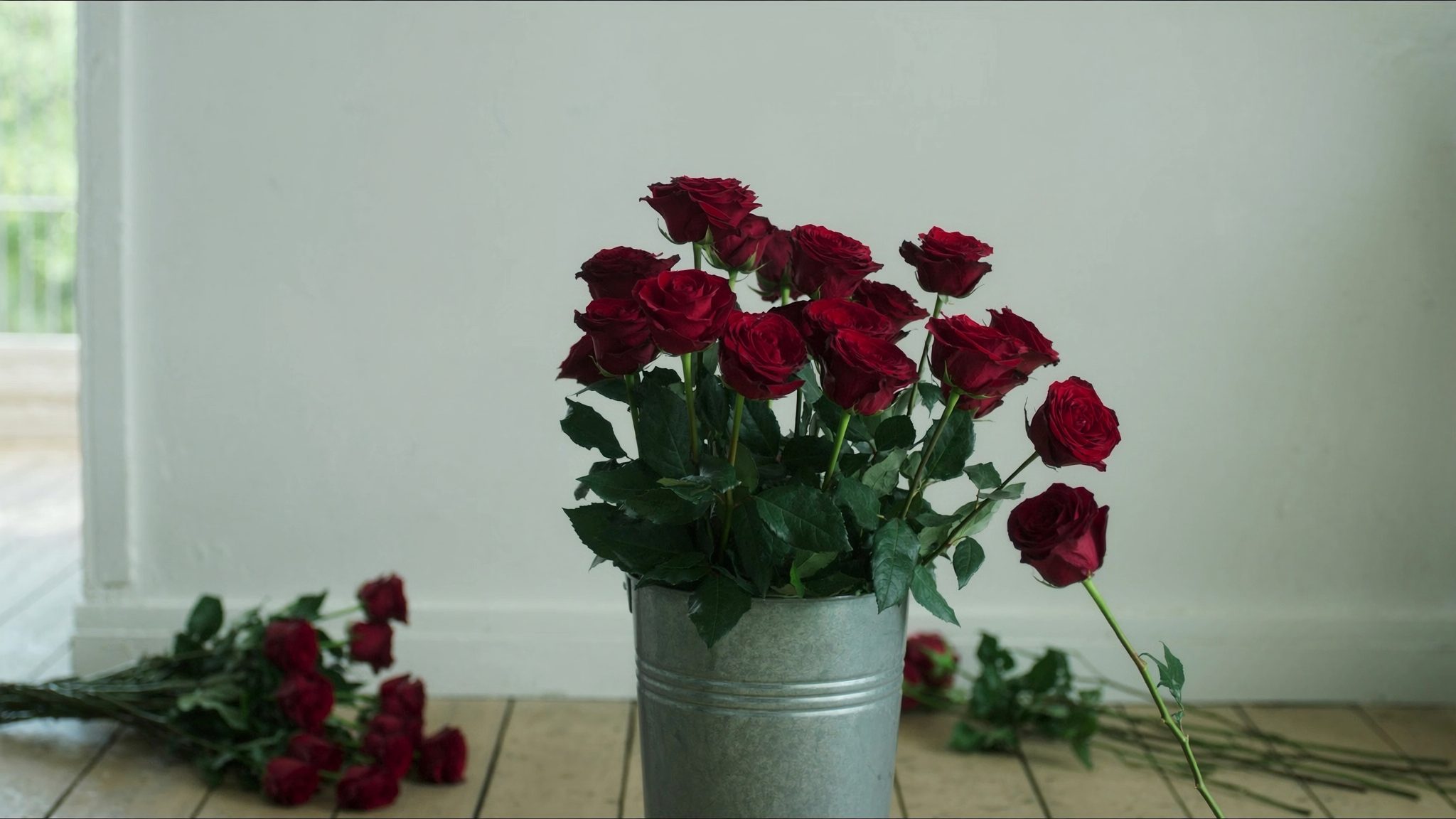
The standard cut roses you see in most flower shops are grown specifically for cutting. Each stem carries one neat, high-centred bloom on a long straight stem with firm petals. They last well and travel well, but they often have little or no scent.
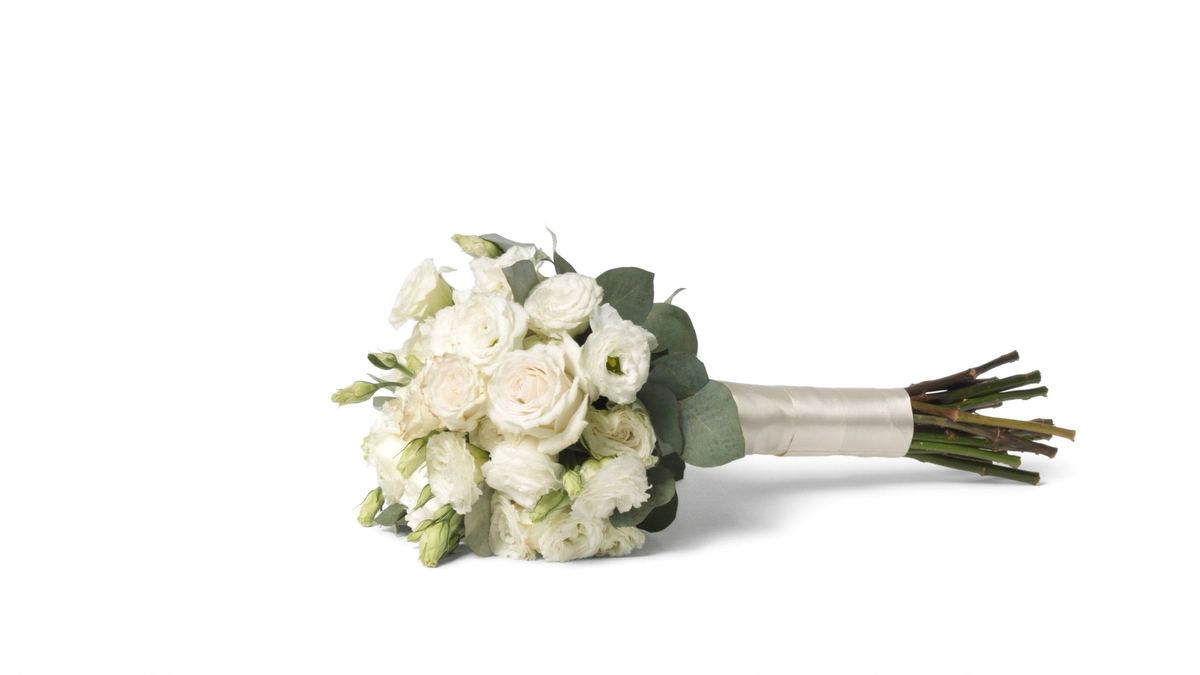
Garden roses look different: many petals, a cupped or rosette-shaped bloom and often a strong fragrance. They are more delicate, open faster and usually have a shorter vase life, often around 5–7 days. Handle them gently, keep them away from heat and change their water more often. Fully open garden roses are popular in wedding and romantic bouquets.
If you want a bouquet that stands for a long time, choose standard roses. If scent and a softer, more natural look matter more, garden roses are a good choice, just expect to enjoy them for a little less time.
Roses in Kaunas
Gitanos gėlės is a flower stand inside the Šilas supermarket at A. Baranausko g. 26, Kaunas, open every day 8:00–23:00. You can buy roses by the stem, from 2,50 € each, or tied into a bouquet. If you would like a bouquet ready when you arrive, pre-order it by SMS on +370 656 38880 or on gitanosgeles.lt.