Guides
What flowers to give a woman when you don't know her taste
What flowers to give a woman when you do not know her taste: safe choices, what colours say, size for a colleague, friend or partner, and what to avoid.
If you do not know which flowers a woman likes, the safest choice is roses in soft colours or a mixed bouquet of seasonal flowers: pale pink, cream, white or peach. In spring tulips are a good choice, and in late spring and early summer, peonies. Flowers like these please most people, carry no awkward meanings and suit almost any occasion. Below: what to choose, what colours say, what size of bouquet suits a colleague, a friend, a partner or a mother-in-law, and what is better avoided.
Safe choices
Roses in soft colours
Almost everyone knows and likes roses, which makes them a reliable choice when you know little about her taste. Go for pale pink, cream, white or peach. Red roses traditionally mean love: they are right for a partner, but for a colleague or an acquaintance they may say more than you intended.
You can also give roses by the stem. A single rose is a small sign of attention, three are often given on romantic occasions, and five or seven already make a small bouquet.
A mixed seasonal bouquet
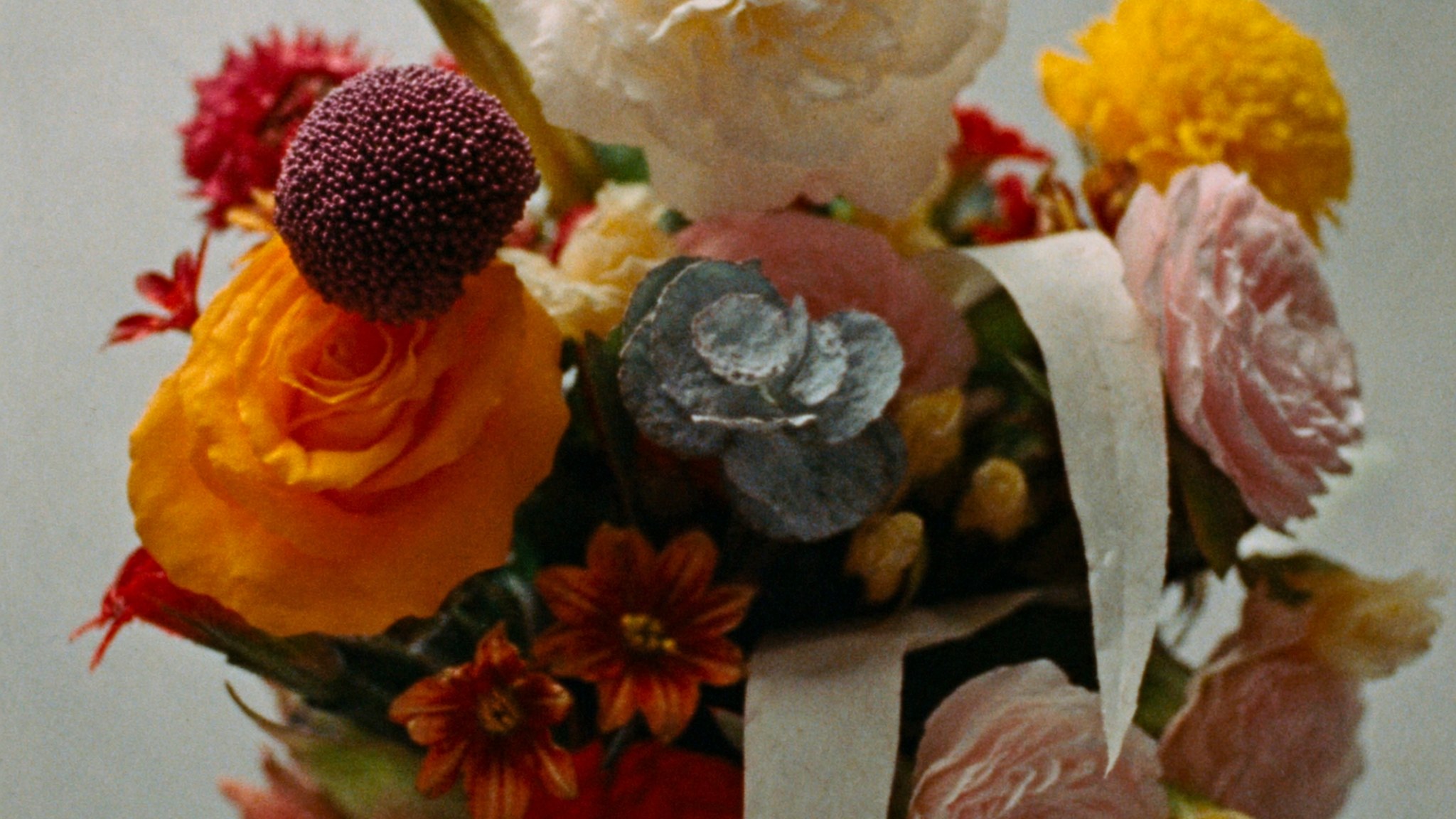
A mixed bouquet of several kinds of flowers is probably the safest choice of all. It has several colours and shapes, so there is almost always something she will like. Soft shades with one brighter accent work well, for example cream roses with a single orange rose or a purple allium. Seasonal flowers are usually the freshest, and fresh flowers last longer in the vase.
Tulips and peonies in season
Tulips are spring flowers. In Lithuania they are especially linked with 8 March and Mother's Day, and they are simple, fresh and carry no heavy associations for almost anyone. Peonies flower in late spring and early summer. Their large, full blooms make an impressive bouquet on their own, so even a few stems are enough. In their own season both are at their freshest and best.
What colours say
Flower colours have traditional meanings. They are worth knowing, but there is no need to lean on them too much.
- Pale pink stands for tenderness, gratitude and affection. It is probably the most versatile colour when you do not want flowers to say too much.
- White and cream are linked with respect and lightness. They suit an older woman and a more formal occasion.
- Peach and orange mean warmth, sincerity and thanks. A good choice for a birthday or a thank-you.
- Red is the colour of love. Keep it for a partner.
- Purple and lilac are mostly used as an accent. They give a bouquet depth and go well with cream and pink flowers.
Most women do not judge a bouquet by a dictionary of colours. It matters far more that the flowers are fresh, neatly tied and right for the occasion.
Size and budget depending on who she is
The size of a bouquet says something too. A tiny bouquet for an important occasion can look rushed, while a very large one for a colleague can make her feel awkward.
- A colleague. A small bouquet in neutral or soft colours, or a few roses. At work, a very large or red bouquet can feel too personal. If the whole team is giving flowers, for example for a milestone birthday, the bouquet can be bigger.
- A friend. A mixed bouquet where you can be bolder with colour. If you know her favourite colour, start from that.
- A partner. Red or pink roses suit here, and the size depends on the occasion. Early in a relationship a single rose or a small bouquet often works better than a huge one. For an anniversary or another important occasion you can choose something fuller.
- A mother-in-law. An elegant, neat bouquet in light colours: white, cream, soft pink. This is where tradition matters: an odd number of flowers and not only yellow ones. The simplest thing is to ask your partner which flowers their mother likes.
As for money, a larger sum does not automatically mean a better gift. A small but thoughtful bouquet often says more than a large one chosen at random.
What to avoid
- All-yellow bouquets. In Lithuania, as in Russia, there is an old saying that yellow flowers mean parting or unfaithfulness. Many people see it as an outdated superstition, but if you do not know her well, mix yellow with other colours.
- Even numbers. For happy occasions flowers are given in odd numbers, while even numbers are linked with funerals and graves. This matters most when you give a few stems of one flower, such as roses. In a mixed bouquet nobody usually counts the stems.
- Very strong scents. The scent of lilies and some other flowers is not pleasant for everyone in a small room or an office. Lilies are also highly toxic to cats, so if she has a cat, choose something else.
- Only chrysanthemums for an older woman. In Lithuania chrysanthemums have long been linked with Vėlinės, All Souls' Day, so some older women do not particularly like receiving them. Spray chrysanthemums in a mixed bouquet usually bring no such associations.
- A bouquet too big to carry home. If you are giving flowers at work or in a café, think about how she will get them home, especially on public transport.
Ask the florist
When you do not know her taste, the easiest thing is to tell the florist everything. A few details are enough:
- who she is to you: a colleague, a friend, your mother, your mother-in-law, your partner;
- the occasion;
- roughly how old she is, if it matters;
- how much you want to spend;
- anything you know about her: she likes bright or soft colours, has a cat, does not like strong scents.
Even one small detail, such as a favourite colour, helps more than any general rule. The florist knows the traditions and will choose the flowers, colours and size so that the bouquet fits.
Flowers for a woman in Kaunas
Gitanos gėlės is a flower stand inside the Šilas grocery store at A. Baranausko g. 26, Kaunas, open every day 8:00–23:00. Bouquets start from 15 € and roses from 2,50 € per stem. You can choose a bouquet on the spot, or pre-order it by SMS on +370 656 38880 or on gitanosgeles.lt and collect it ready.